Brand perception testing FOR YOUR ICP
Your brand says one thing. What do buyers hear?
The positioning on your website is what you intend. Brand perception is what people take away. Explore the associations and doubts that shape consideration before assuming the two are the same.
REQUEST RECEIVED
Your request is in.
Our team will review your question and audience, prepare your sample report, and email it to you.
This is just a quick taste. To run full simulations, book some time with us.
Book a Demo ↗START WITH THE DECISION
What is brand perception testing?
Brand perception testing explores how an audience describes a brand, what it associates with it, and how those impressions influence consideration. It can investigate credibility, relevance, differentiation, or a proposed change in brand expression. Gather helps define a focused research brief and request a report. An exploratory or simulated report is not a representative brand tracker, market-share estimate, or measurement of population-level awareness.
Bring the decision.
Add the ideas you want to compare and the people whose perspective matters. Use the example if you want a starting point.
Get a clear test brief.
See your question, audience, approach, and evaluation criteria immediately. This is a brief you can use, not a research result.
Request your report.
Share your email if you want to continue. Gather’s team prepares your simulated sample report, or scopes a real interview study with you.
A QUESTION WORTH ANSWERING
Know what a better answer looks like.
Spontaneous associations
Explore the words, situations, and expectations connected with the brand before prompting desired attributes. Distinguish established impressions from reactions created by the question itself.
Relevance and consideration
Understand which needs bring the brand into the conversation and which situations exclude it. Familiarity does not automatically mean suitability or willingness to consider.
Credibility of the promise
Identify whether the intended brand promise feels believable and what experiences or evidence would support it. Separate an appealing ambition from a reputation the audience recognizes.
Meaningful difference
Explore how the brand is described relative to relevant alternatives. Look for differences that matter in the buying situation, not simply words people can remember.
AN EXAMPLE BRIEF, NOT RESEARCH FINDINGS
Explore these brand perceptions, associations and consideration gaps:
Brand: Acme. Intended perception: simple and dependable.
Explore what supports or weakens that impression compared with familiar alternatives.
Audience: US small-business owners who choose payroll software
01 / A BETTER TEST
Choose the brand question before choosing the measures
Start with the decision the research should inform. A brand refresh, a consideration problem, and a reputation concern require different questions. State the intended perception and what would change if it is not shared by the audience. Asking for a broad brand score without a decision behind it can produce an interesting readout with no clear action.
Define the audience's relationship with the category and brand. Customers, former customers, category buyers, and people unfamiliar with the brand bring different contexts. For B2B, an end user's impression may differ from a procurement team's. For B2C, perceptions may vary by purchase occasion, store experience, or product line. Keep those perspectives visible rather than blending them into one generic buyer.

02 / A BETTER TEST
Separate existing perceptions from reactions to new material
Ask open questions before presenting the attributes you want people to endorse. For example, explore what comes to mind and what type of need the brand seems suited to address. Then examine the intended promise. Asking whether the brand is innovative before exploring spontaneous associations can make innovation appear more central than it was at the start of the conversation.
If you show a new identity, campaign, or description, label the task as testing that material. A reaction to a concept is different from unaided awareness or an established market reputation. Use consistent stimulus and question wording when comparing alternatives, and note when the audience is judging a proposed expression rather than describing an existing relationship with the brand.

03 / A BETTER TEST
Connect the perception gap to an action you can own
A useful readout distinguishes a communication gap from an experience gap. If people understand the promise but do not believe it, new copy alone may not help. The next move could be clearer evidence, a product improvement, a service change, or a campaign that makes an overlooked strength tangible. Identify which team owns the action and what evidence would show progress.
For ongoing brand health measurement, use a real-respondent design and keep audiences, sampling, scales, and timing comparable. Changes can reflect measurement differences as well as market movement. Simulated or exploratory findings can help sharpen questions, but should not be presented as representative awareness, market share, or a defensible population trend.

Keep the test honest.
A simulated sample is directional, not a survey of real people. Use it to sharpen a hypothesis and identify what to investigate. Real interviews are scoped separately. Choose the evidence your decision calls for.
Common mistakes to avoid
- Prompting every desired brand attribute before asking what people associate with the brand on their own.
- Treating reactions to a new campaign as a measurement of the brand's established market reputation.
- Reporting directional simulated impressions as representative awareness, market share, or a comparable brand-health trend.
RESEARCH PEOPLE CAN PUT TO WORK
See what an original perspective looks like.
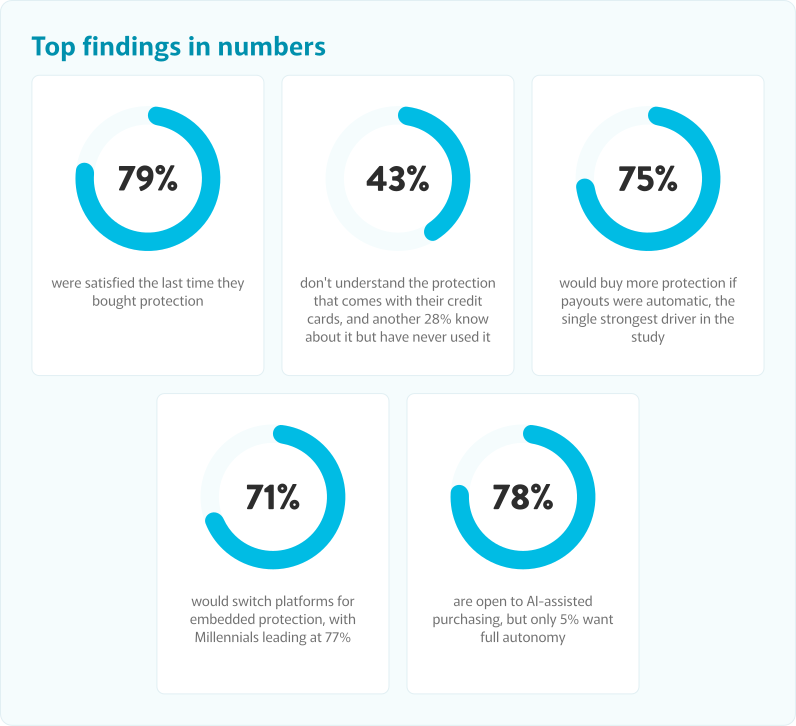
Published research from brands Gather serves. These are examples of research deliverables, separate from the illustrative briefs in these tools.
COMMON QUESTIONS
Brand perception testing questions, answered.
Is brand perception the same as brand awareness?
No. Awareness concerns whether people know or recognize a brand. Perception concerns what they think it means and whether it feels relevant or credible. A brand can be familiar without being considered for the purchase situation you care about.
Can I test a new brand identity or campaign?
Yes. Describe the proposed expression and the audience you want to reach. Treat the work as a concept evaluation. It explores how the material is interpreted, rather than measuring an established reputation or unaided awareness in the market.
Does a sample report replace a brand health tracker?
No. A representative tracker needs a suitable real-respondent design, consistent measures, and comparable samples over time. An exploratory or simulated report can help clarify the question and uncover hypotheses, but cannot substitute for those measurements.
Should I include competitor brands?
Include alternatives that buyers actually consider in the relevant situation. Explain why they belong in the comparison. Avoid a long competitor list that mixes different categories, because an unclear frame makes the perceived differences harder to interpret.
What happens when I submit a brand perception brief?
The tool helps organize the question, audience, and context. If you request a report, your details go to the Gather team for preparation and follow-up. It does not automatically launch interviews, publish findings, or alter an existing tracker.